

Professional Repair & Diagnostics
Expert Gas Line Repair & Service in Prince George, BC
A gas leak, failing pressure, corroded lines, or a broken regulator isn't something you fix yourself. Gas problems are invisible, dangerous, and demand precision diagnostics and certified repair work. Elevated HVAC & Gasfitting handles every gas line repair scenario—from detecting and fixing leaks to replacing damaged sections, addressing pressure issues, and restoring safety to your system. As a Certified Gas Contractor with 15+ years of hands-on experience, we bring forensic-level diagnostics and field-proven repair expertise to every job. We'll identify exactly what's wrong, explain your repair options, and get your gas system running safely and reliably again.
Why It Matters
Why Choose Elevated for Your Gas Line Repair
Certified Gas Contractor with Forensic Diagnostics
Only a Certified Gas Contractor can legally perform gas line repairs in BC. We hold this credential and combine it with forensic-level diagnostic skills: we use electronic leak detectors, pressure gauges, combustion analyzers, and visual inspection to identify failures that many technicians miss. A corroded section of pipe, a stuck regulator valve, a failed fitting, or a slow leak that’s been going unnoticed—we find it all. Our expertise means you get an accurate diagnosis on the first visit, not a guessing game that costs time and money.
Specialized Leak Detection Equipment
We carry professional-grade electronic leak detectors that pinpoint even tiny leaks invisible to the nose. We also use bubble testing (soapy water) and pressure-hold testing to confirm every leak location before planning repairs. This precision saves you money by letting us repair only what needs repair, not replace entire sections when a single fitting is the culprit.
15+ Years of Troubleshooting Experience
Our team has diagnosed and repaired hundreds of gas line failures: pinhole leaks in aging copper, corroded black iron pipe in damp basements, failed regulators, appliance connection failures, and pressure problems caused by undersized piping. This depth of experience means we quickly recognize patterns, understand the root cause (not just the symptom), and recommend repairs that solve the real problem, not just temporarily mask it.
Technical Safety BC & FortisBC Registered
We’re members in good standing with both Technical Safety BC and the FortisBC Trade Ally Network. This means our repairs meet all provincial codes, and we’re authorized to perform post-repair inspections that certify your system is safe and compliant. Many homeowners repair a gas problem only to face a failed home inspection because the work wasn’t done to code—we ensure that never happens.
Honest Diagnostics, No Pressure to Over-Repair
You’ll get a straight assessment: what must be repaired for safety, what should be repaired to prevent future failure, and what can wait. We won’t recommend replacing an entire gas line when tightening a fitting or replacing a single coupling solves the problem. You’ll always know exactly what work we’re recommending and why.
Warranty on All Repairs
Every repair is completed to Technical Safety BC standards and pressure-tested before we leave. If a repaired joint leaks again, we come back and reassess it. If you replace a regulator and it fails prematurely, we stand behind it. Repairs done right the first time mean you won’t face a repeat service call and added expense.

Next Step
When Gas Line Repair Can't Wait
A gas line failure isn't a problem you put off. Whether it's a slow leak that's gone undetected, a regulator that's failed, appliance connections that aren't working, or pressure that's dropping, the consequences of delay are real: wasted gas that drives up utility costs, appliances that won't light or operate properly, and potential safety hazards that affect your family.
Many Prince George homeowners know something's wrong with their gas system but aren't sure what. You notice a faint rotten-egg smell near the meter. Your furnace pilot light keeps going out. Your water heater flame looks wrong. Your gas bill spiked for no reason. These are signals that diagnostics are needed. The good news: most gas problems are fixable with targeted repair work by a certified technician—you won't always need a complete system replacement.
Our repair process starts with honest diagnostics. We'll visit, inspect your system, run pressure tests, check for leaks, test appliance performance, and explain exactly what's failing and why. Then you'll know what must be done, what's recommended, and what the realistic timeline and cost look like.
Request Your Diagnosis
Our Process
Our Gas Line Repair & Diagnosis Process
1. Phone Assessment & Scheduling
When you call describing the problem—a smell, a pilot light issue, a pressure problem, or a suspected leak—we’ll ask a few quick questions to understand the symptoms: When did you first notice the problem? Are any appliances affected or all of them? Is there a smell? Have you noticed any other changes? This helps us arrive prepared with the right tools and parts for your specific issue. We’ll schedule a visit and explain what to expect.
-
Understand when the problem first appeared and how it presents -
Identify whether one appliance or the whole system is affected -
Note any smell, sounds, or other changes you’ve observed -
Arrive prepared with the right diagnostic tools and parts -
Schedule a visit and explain what to expect
2. Visual Inspection & System Assessment
We begin by visually inspecting all accessible gas lines and fittings. We look for corrosion, damage, loose connections, improper routing, or anything that stands out. We’ll verify the regulator is in good condition, check shutoff valves for proper operation, and confirm appliance connections are tight and properly configured. This gives us initial clues before we run any tests.
-
Inspect all accessible gas lines and fittings for corrosion and damage -
Look for loose connections and improper routing -
Verify the regulator is in good condition -
Check shutoff valves for proper operation -
Confirm appliance connections are tight and properly configured
3. Pressure Testing & Diagnostics
We connect a precision pressure gauge to the system (or use a test point) and measure the pressure at the meter, at the appliance inlet, and anywhere you’re having problems. Low pressure often points to a regulator failure, a blockage somewhere in the line, or a leak. High pressure is rare but equally problematic and usually means regulator failure. We also measure pressure drop over time: if pressure drops, there’s a leak. If pressure holds steady, the system itself is sound but an appliance may be the culprit.
-
Connect a precision pressure gauge at the meter and appliance inlet -
Measure pressure anywhere you’re having problems -
Diagnose low pressure: regulator failure, blockage, or leak -
Rule out rare high-pressure regulator failure -
Measure pressure drop over time to confirm whether a leak exists
4. Electronic Leak Detection
If we suspect a leak but pressure testing hasn’t pinpointed it, we use an electronic leak detector that sniffs for mercaptan (the rotten-egg odor additive). This tool finds leaks in joints, fittings, and small pinhole failures in pipe that a visual inspection alone might miss. We’ll mark every leak location so repair work is precise.
-
Deploy an electronic leak detector that sniffs for mercaptan -
Find leaks in joints, fittings, and small pinhole failures -
Catch leaks a visual inspection alone might miss -
Mark every leak location for precise repair -
Avoid replacing sound pipe by isolating exact failure points
5. Appliance Function Check
We’ll light each appliance that uses gas and check burner ignition, flame color, flame stability, and venting (for furnaces, water heaters, fireplaces). If an appliance has a fault, that’s separate from a supply-side problem, and we’ll flag it so you know whether the issue is your gas line or the appliance itself. Sometimes both need repair; sometimes it’s just one.
-
Light each gas appliance and check burner ignition -
Assess flame color and flame stability -
Verify venting for furnaces, water heaters, and fireplaces -
Distinguish appliance-side faults from supply-side problems -
Flag whether the issue is your gas line, the appliance, or both
6. Repair Recommendation & Quote
Once diagnostics are complete, we explain exactly what we found. Is there a leak? Where? Is the regulator failing? Is pressure low? Are appliance connections loose? Are there corroded sections that pose a safety risk? We’ll recommend repairs: if a fitting is loose, we’ll tighten it and pressure-test to confirm the seal. If a regulator is failed, we’ll replace it. If corrosion is advanced, we may recommend replacing that section of pipe. We’ll also note any code violations and explain the fix. You’ll get a detailed quote that itemizes every repair, and we’ll do only the work you approve.
-
Explain exactly what diagnostics uncovered -
Recommend tightening or replacing loose or failed fittings -
Recommend regulator replacement where a regulator has failed -
Recommend replacing advanced corroded sections of pipe -
Note any code violations and explain the fix -
Provide a detailed quote that itemizes every repair
7. Professional Repair & Testing
We’ll execute the repairs to specification. If tightening a fitting solves the problem, that’s what we’ll do. If we need to replace a regulator, we’ll swap it with a code-compliant unit, test pressure, and verify the new regulator works correctly. If pipe is corroded and poses a risk, we’ll cut out the bad section and join new pipe using approved fittings and procedures. After every repair, we pressure-test the entire affected section to confirm zero leaks and proper operation.
-
Tighten fittings and pressure-test to confirm the seal -
Replace failed regulators with code-compliant units -
Cut out corroded pipe and join new pipe with approved fittings -
Verify replaced components work correctly -
Pressure-test the entire affected section for zero leaks
8. Documentation & Handoff
Once repairs are complete and verified, we provide you with a detailed report: what was wrong, what we repaired, pressure-test results, any appliance notes, and warranty information. If your repair involved a potentially code-violating condition or an installation issue, we may recommend a Technical Safety BC inspection to certify the final state (at additional cost). For most repairs, our pressure-test results are your record that the work meets code. We’ll also walk you through the system: where shutoff valves are, how to recognize if a problem returns, and what to do if you smell gas in the future.
-
Provide a detailed report of what was wrong and what was repaired -
Include pressure-test results and appliance notes -
Recommend a Technical Safety BC inspection where warranted -
Show you where shutoff valves are located -
Explain how to recognize a returning problem and what to do -
Provide warranty information in writing




Common Questions
Frequently Asked Questions About Gas Line Repair
Loose fittings and connections account for a significant portion of our repairs. A fitting that wasn't tightened enough during installation, vibration that gradually loosened a connection, or corrosion that weakened a seal—any of these create a small leak. We find it, tighten or replace the fitting, pressure-test it, and the problem is solved. It's often a one-visit fix.
We use electronic leak detectors that sniff for mercaptan, the rotten-egg odor additive in natural gas. Many leaks are too small to smell, especially if they're in a wall, under the floor, or in a basement far from living spaces. Our electronic tool pinpoints the location precisely so we can repair only that point, not replace long sections of pipe unnecessarily.
It depends on the extent and location. If corrosion is confined to a single fitting or short section, we cut out the corroded part and splice in new pipe with proper fittings. If corrosion is widespread or the pipe has pinhole leaks throughout, replacing that section is safer and more cost-effective than patching multiple spots. We'll assess and recommend the practical solution.
Repair costs depend on what's wrong. A loose fitting tightened and pressure-tested is a quick fix. A regulator replacement involves selecting and installing the right unit. A corroded section that needs splicing depends on how much pipe is involved and how accessible it is. We provide a detailed quote during the diagnostic visit that breaks down every component, and most repair projects qualify for flexible financing.
Low pressure means gas isn't reaching your appliances at the right pressure for normal operation. This can be caused by a regulator failure, a blockage in the line, or a leak somewhere. A pressure-drop test tells us which: if we pressure the system and the gauge holds steady, there's no leak—the problem is regulator or blockage. If pressure drops over time, there's a leak. Once we know which, we know what to fix.
That depends on what the problem is. A slow leak that's not creating a safety hazard can often wait a day or two for diagnostics. A strong smell or pilot lights going out repeatedly are signs you should stop using the affected appliance and call us. If you smell gas strongly, leave the area, call FortisBC's emergency line from outside, and let them assess. Once they give the all-clear, we can diagnose and repair.
Most routine repairs—tightening fittings, replacing a regulator, fixing appliance connections—don't require a Technical Safety BC inspection. However, if the repair involves replacing a long section of pipe, changing the system layout, or addressing a code violation, inspection may be required or recommended. We'll tell you upfront if that's the case and help coordinate the inspection.
Many repairs take a single visit of 30 minutes to a couple of hours depending on the problem and access. A leak in a buried line or a corroded section that requires cutting and splicing might take longer. If the repair involves a Technical Safety BC inspection, add time for inspection scheduling, usually within a few business days. We'll give you a realistic timeline estimate during the diagnostic visit.
All our repair work is completed to Technical Safety BC standards and pressure-tested. If a repaired joint leaks again, we'll come back and reassess it. If a replaced regulator fails, we stand behind it. This warranty gives you confidence that the work is done right and won't lead to a repeat service call.
We recommend periodic inspection—especially if your system is aging or you've never had a professional look at it. An annual gas safety check can catch corrosion, fitting issues, or regulator wear before they become emergencies. Inspection is far cheaper than repair when a small problem has grown into a big one. Ask us about our safety check service.
Related Services
Related Gas & HVAC Services
Gas Line Installation & Replacement
If repair isn’t viable or your system is aged and unreliable, we design and install a new gas line system with full Technical Safety BC compliance.
Leak Detection & Inspection
Dedicated leak-finding service using professional equipment and thorough system inspection from the utility connection forward.
Gas Safety Checks
Annual or periodic safety inspections to identify corrosion, connection issues, and aging components before they fail.
Pressure Testing
Detailed pressure diagnostics to confirm system health and identify flow or supply problems.
Natural Gas Services
New natural gas hookups, system upgrades, and appliance additions handled with the same certified precision.
Propane Gas Services
Tank placement, regulator work, and propane line repair for homes off the natural gas grid.
Appliance Connections
Safe, code-compliant gas hookups for furnaces, water heaters, stoves, and fireplaces.
Service Areas
Gas Line Repair Across Northern British Columbia
We proudly serve Prince George and the following surrounding communities with expert gas line repair, diagnostics, and service. We’re experienced with the varied home construction and climate conditions of northern BC, and we handle repairs with the same precision diagnostics and attention to safety wherever you are.
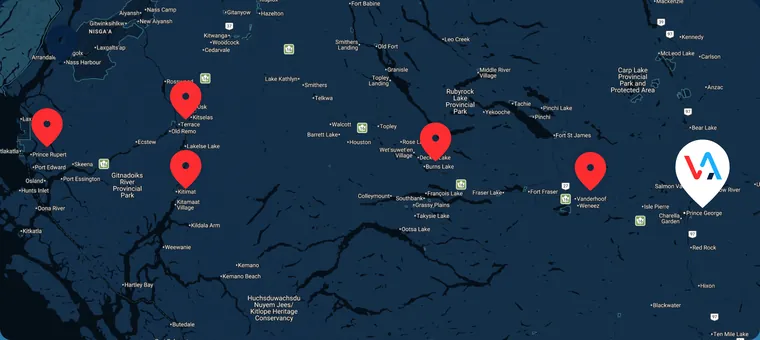
Additional Communities Served
Don't see your community listed? Reach out and we'll let you know if we can get to you.
Prince George, BC
The hub of our operations. We handle gas line repairs and diagnostics for residential and commercial properties throughout the city.
Terrace, BC
Coastal northwest region. We diagnose and repair gas system problems in older and newer homes alike, including pressure issues and leak detection in damp climate conditions.
Prince Rupert, BC
Northwest coastal community. Complex repairs in older homes and challenging site conditions handled with the same precision diagnostics and attention to safety.
Kitimat, BC
Mountainous terrain with varied home construction. We troubleshoot gas problems and provide repair expertise for properties of every age and layout.
Burns Lake, BC
Highway 16 corridor between Prince George and the coast. Complete gas line repair and diagnostic services coordinated from our central base.
Vanderhoof, BC
Central interior community. We service gas systems and provide professional repair diagnostics for residential and light commercial properties.

Specials & Coupons
Giving back to the community
We're proud to offer discounts to the people who serve our community.
First Responder & Senior Discount
A discount on service for active first responders and seniors.
Cannot be combined with any other offer.
Schedule Service
Customer Reviews
Read ReviewsSee What Our Prince George Neighbors Are Saying
We've built our reputation one job at a time across Prince George and the surrounding Northern BC communities. Read what real customers have to say about working with our team, and check out our current rating on Google.
Ready When You Are
Get Your Gas Line Repaired by Certified Experts
A gas line problem demands precision diagnostics and certified repair work. Whether you’ve noticed a smell, a pilot light won’t light, a burner won’t ignite, or your gas bill has spiked, the root cause needs professional discovery. Most gas repairs are straightforward once you know what’s wrong—a loose fitting tightened, a regulator replaced, or a corroded section removed and spliced.
Elevated HVAC & Gasfitting brings certified expertise, professional-grade diagnostic tools, and 15+ years of troubleshooting experience to every repair. We’ll find exactly what’s failing, explain your options, and fix it right the first time. Our repairs carry a warranty against defects, and we provide complete documentation of all work done.
From the initial diagnostic visit through pressure testing, repair, and final verification, we own the process so you never wonder if the work was done correctly. We’re transparent about cost: you’ll get a detailed quote before we begin, and we won’t recommend repairs you don’t need. Most repairs qualify for flexible financing if cost is a concern.
Elevated HVAC & Gasfitting is locally owned and operated, and our reputation depends on every repair being done right. If you’re also looking to upgrade aging heating or water heating systems, ask us about annual maintenance that keeps your entire home comfort system running safely and efficiently.
Call us today for a gas line repair diagnosis. We’ll visit your property, run complete diagnostics, identify the problem, and explain exactly what needs to happen next.
Family-Owned & Operated
Fortis BC Trade Ally Network
Journeyman Sheet Metal Worker
Certified Gas Contractor
15+ Years of Experience
Satisfaction guaranteed
