

Professional Standby Generator Gas Line Connections
Standby Generator Gas Connections in Prince George, BC
Expert standby generator and backup system gas connections across Prince George and coastal BC. When the grid fails, your backup must work—and that starts with a properly installed and compliant gas line. We handle every detail, from site assessment through Technical Safety BC certification and utility activation.
Why Choose Us
Why Homeowners Trust Us With Standby System Connections
Certified Gas Contractor
We carry the provincial credential to design, install, and certify backup system connections that meet Technical Safety BC standards. Standby systems demand expertise; inspection failures or code violations are costly to fix after installation. Our licensing means the regulator recognizes our work as compliant before inspection—a signal that we've done the engineering correctly.
Integrated system approach
Backup systems aren't isolated from your HVAC or plumbing—they coordinate with existing infrastructure. We assess your whole home or building, evaluate your existing gas line capacity, ensure proper gas flow from the line to the generator, and verify everything passes final pressure testing and inspection. A standby generator running at full capacity while your furnace heats and your hot water system fires demands careful load balancing; we design for all scenarios.
Technical Safety BC compliance
British Columbia's regulatory body requires licensed contractors to manage permits and final signoffs for propane and natural gas standby systems. We handle all coordination so your install doesn't stall in the permitting queue. We've built relationships with the technical reviewers and know common hold-ups; we design to avoid them from the start.
Journeyman Sheet Metal expertise
Our team includes certified sheet metal workers who size piping correctly, design proper ventilation for standby units, and ensure the installation logic holds up under inspection. Sheet metal skills are essential for adapting ductwork routing around a new gas line and for securing piping in ways that prevent vibration damage and code violations.
Established track record
15+ years of experience in gas system work. We've installed and certified standby systems across Prince George, Terrace, Prince Rupert, Kitimat, Burns Lake, and Vanderhoof—we know the regional requirements and local utilities' expectations. Regional experience matters: coastal areas face humidity and salt-air corrosion concerns; Burns Lake and Vanderhoof present frost-depth and seasonal water-table challenges that affect line burial depth and protection.
Upfront pricing transparency
We assess your site, explain what the work involves, and give you a clear picture of cost and timeline before any commitments. No surprises mid-project. We walk you through the permitting timeline, the inspection process, and what to expect from the utility when activation day arrives.

Is Your Backup Ready
Is Your Backup System Ready to Work When It Needs To?
Standby generators and backup heat systems are only valuable if they're properly connected and certified. A gas line that leaks, a connection that fails inspection, or a line sized too small for the demand means your backup won't start when the power goes down.
Request Your Assessment
Our Process
Our Backup System Connection Process
1. Site Assessment & Design
We begin by understanding your backup system—its fuel demand (measured in BTU/h), the gas type it requires (natural gas or propane), and its location relative to your property's gas entry point. We measure distances, identify routing challenges (obstacles, outdoor exposure, frost depth for buried lines), and determine whether an existing gas line can support the demand or whether a new line is needed. We also verify your home's or building's total gas capacity by examining your meter size and current appliance loads, and calculate the combined load so we can right-size the supply line to serve furnace, water heater, and standby generator simultaneously without pressure loss.
-
Measure distances and identify routing challenges (obstacles, outdoor exposure, frost depth) -
Verify total gas capacity by examining meter size and current appliance loads -
Calculate combined load: furnace peak + water heater peak + standby generator demand -
Confirm setback distances from property lines (typically 1–1.5 meters for buried lines) -
Confirm clearances from other utilities (electrical, water, sewer) -
Determine burial depth below the regional frost line (2 to 4 feet, coastal vs. interior)
2. Permit Coordination with Technical Safety BC
Standby systems require a Technical Safety BC work permit before installation. We complete the application, including drawings, materials specifications, and your property details. We manage the review cycle, respond to any technical requests, and obtain the work approval. The permit protects both you and us—it's a commitment that the work will be inspected and signed off by the regulator.
-
Complete the work permit application with drawings and materials specifications -
Submit your property details to Technical Safety BC -
Manage the review cycle and respond to any technical requests -
Obtain the work approval before installation begins
3. Gas Line Installation & Pressure Test Preparation
Once permitted, we install the new line or extend the existing one. Materials are specified in the permit: CSST for indoor/partially buried runs where codes allow, or black iron pipe for certain above-ground scenarios. Every connection is brazed or threaded to code, with special attention to the connection at the standby unit's inlet—the highest-stress joint in the system. We slope the line for proper drainage, secure it with professional-grade clamps at code-mandated intervals, and pressure-test the entire run before final inspection, documenting the pressure curve as evidence the system is sound.
-
Install new line or extend existing one using CSST or black iron pipe per permit -
Braze or thread every connection to code, with focus on the standby unit's inlet -
Slope the line for proper drainage to avoid trapped water vapor -
Secure the line with professional-grade clamps and supports at code intervals -
Install warning tape and above-ground route markers for buried lines -
Pressure-test the entire run for the required 10–15 minute hold with no drops -
Document starting and final pressure as evidence of integrity
4. Final Technical Safety BC Inspection
The regulator's inspector examines the line routing, pressure-test documentation, connection points, and the integration between the gas supply and the backup unit. The inspection confirms the system meets design codes, is safe for long-term operation, and is ready to carry gas to the standby appliance when called upon. Once approved, we obtain the work completion certificate.
-
Inspector examines line routing and connection points -
Inspector reviews pressure-test documentation -
Inspector verifies integration between gas supply and backup unit -
Confirm the system meets design codes and is safe for long-term operation -
Obtain the work completion certificate on approval
5. Utility Coordination & Service Activation
For natural gas systems, we coordinate the final activation with FortisBC or your local utility. They may perform their own meter or regulator check to verify that a significant new draw won't cause pressure drops on their feeder lines. Once utilities confirm service is live and safe, your backup system can draw fuel as needed. We walk you through the startup process, answer questions about annual maintenance checks, and hand you the full compliance documentation package.
-
Coordinate final activation with FortisBC or your local utility -
Allow the utility to verify the new draw won't cause pressure drops on feeder lines -
Walk you through safe startup, pressure readings, and normal vs. alarm-worthy signs -
Recommend a leak detection sweep every 1–2 years and visual connection inspection -
Hand over the Technical Safety BC work completion certificate -
Hand over the pressure-test report with before/after readings -
Hand over the inspection sign-off and the utility's activation confirmation




Common Questions
Frequently Asked Questions
Standby systems demand higher fuel flow rates and must be sized to support a much larger BTU load than typical appliances. A standby generator might pull 40,000+ BTU/h while your furnace draws 80,000–100,000 BTU/h. If both run at once, the line must be oversized to serve them both. We size for worst-case demand and verify that pressure stays stable across the entire run.
It depends on three factors: the size of your existing line (1/2", 3/4", 1"), the total demand of all gas appliances (including the standby unit), and the distance from the meter. We assess all three and test pressure under full demand. If the line can't hold pressure and serve the standby system without pressure drop, we extend or replace it.
The installation itself typically takes 2–4 days depending on routing complexity and whether we're working in established lines or trenching new runs. Permitting adds 1–3 weeks depending on Technical Safety BC's review queue. We plan the work upfront so you know the timeline before we start.
It's rare, but if the inspector finds a code violation—perhaps an improperly sized fitting or a line routed in a way that violates setback rules—we address it immediately. We bear the cost of corrections because the work is our responsibility. We don't hand off a failing inspection to the homeowner.
That depends on your backup unit's design and your home's existing gas infrastructure. If you have an existing natural gas line and your standby unit is rated for natural gas, we connect to that. If you want propane (perhaps for reliability during utility outages), we install a new propane line and coordinate with a propane supplier. We advise based on your situation.
We handle it. Pressure testing is part of our standard installation—we test after installation and again before the final inspection. The full test report becomes part of your compliance documentation for Technical Safety BC.
Once inspected and certified, the gas line itself requires no ongoing maintenance—it's a passive system. However, we recommend annual or biennial leak detection on the entire line to catch any pinhole corrosion or connection loosening from vibration (especially relevant if your standby unit runs regularly). We offer that as part of our gas safety check service.
Our installation labor is completed to Technical Safety BC standards and pressure-tested for integrity. The manufacturer's warranty on the generator itself covers the appliance. If a connection fails due to a defect in our workmanship or materials within a reasonable timeframe, we address it. The backup line is then protected by ongoing leak detection and inspection.
A properly installed and inspected gas line has a long life. If you upgrade the standby unit in the future and it has a different fuel demand, we can assess whether the existing line is sufficient or if we need to upsize. In most cases, a line installed for a standby system is oversized compared to typical appliances, so future changes are straightforward.
After inspection approval and utility activation, you'll receive a Technical Safety BC completion certificate, a copy of the pressure test report, and documentation of the final inspection. Your backup unit is then cleared to draw fuel. We recommend a dry-run test where you start the system and verify fuel flow and operation before relying on it for an actual outage.
Related Services
Complete Gas & HVAC System Integration
Gas Line Installation & Replacement
Our core expertise. Standby system connections are often part of a larger gas infrastructure upgrade. We handle new gas lines, extended runs, and full replacements.
Utility Coordination
Standby systems depend on utility service and coordination. We manage the permit-to-activation handoff with FortisBC and local providers so activation is seamless.
Gas Pressure Testing & Inspection
Every standby system connection is tested to code. We perform the full system test and provide documentation for Technical Safety BC approval.
Indoor Fireplace Connections
Another specialized gas application. Our experience connecting high-demand appliances translates across backup systems, fireplaces, and pool heaters.
New Construction HVAC & Gas Design
Backup systems are often specified during the planning stage of a new build. We coordinate standby gas connections alongside a home's overall HVAC and gas system design from the outset.
Service Areas
Standby System Gas Connections Across Coastal BC
Elevated HVAC & Gasfitting installs and certifies standby system gas connections for homeowners and builders throughout Prince George and five surrounding communities. We know the regional requirements and local utilities’ expectations wherever you are.
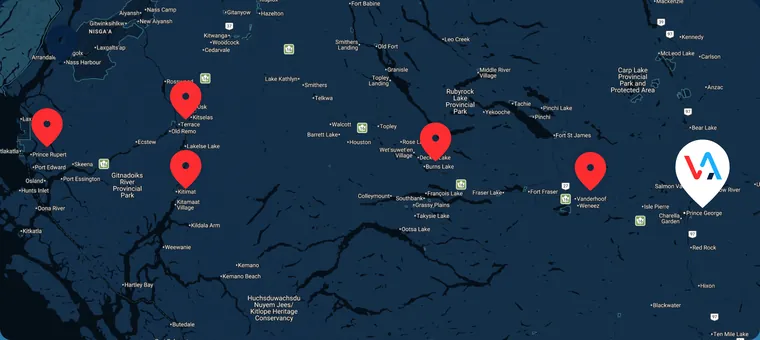
Additional Communities Served
Don't see your community listed? Reach out and we'll let you know if we can get to you.
Prince George
Our headquarters. We handle standby systems on residential and light commercial properties across the greater Prince George area, including surrounding neighborhoods and rural properties within regular service range.
Terrace, BC
Northwest coastal region. We serve Terrace homeowners and builders installing backup systems in a climate where extended power interruptions are a realistic concern.
Prince Rupert, BC
Coastal gateway. Standby systems are increasingly common in Prince Rupert; we coordinate with local contractors and FortisBC for reliable installations.
Kitimat, BC
Aluminum production center. We install industrial-scale standby system connections for large facilities and residential backup systems for Kitimat homeowners.
Burns Lake, BC
Highway 16 corridor. Backup systems in the Burns Lake area benefit from our understanding of rural gas infrastructure and seasonal weather challenges.
Vanderhoof, BC
Central corridor community. We serve Vanderhoof with standby system gas connections for residential and small commercial applications.

Specials & Coupons
Giving back to the community
We're proud to offer discounts to the people who serve our community.
First Responder & Senior Discount
A discount on service for active first responders and seniors.
Cannot be combined with any other offer.
Schedule Service
Customer Reviews
Read ReviewsSee What Our Prince George Neighbors Are Saying
We've built our reputation one job at a time across Prince George and the surrounding Northern BC communities. Read what real customers have to say about working with our team, and check out our current rating on Google.
Get Started
Ready for a Backup System That Works When You Need It?
Your backup system is only as good as its fuel supply. A standby generator or heat system connected to a non-compliant or undersized gas line will fail when you need it most. Let Elevated HVAC design and install a backup system connection that meets code, passes inspection, and keeps your system running reliably for years to come.
We handle every step—from site assessment through Technical Safety BC certification. We manage permits, coordinate with utilities, pressure-test the entire system, and deliver you a fully compliant installation with complete documentation. When you trust us with your backup system, you’re working with a licensed, certified contractor who’s been serving Prince George and coastal BC for 15+ years.
From Prince George to Terrace, Prince Rupert, Kitimat, Burns Lake, and Vanderhoof, we bring the same precision and compliance to every standby system connection. Reach out today and we’ll begin with a straightforward site assessment and a clear picture of cost and timeline.
Family-Owned & Operated
Fortis BC Trade Ally Network
Journeyman Sheet Metal Worker
Certified Gas Contractor
15+ Years of Experience
Satisfaction guaranteed
